
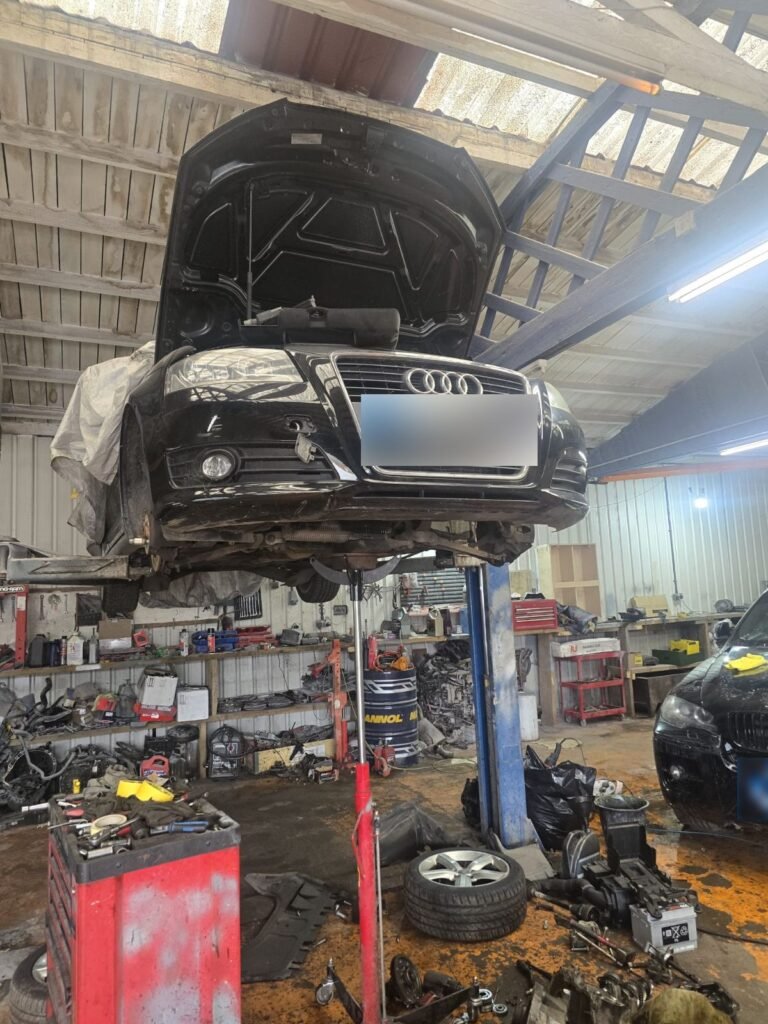
If you keep topping up the coolant, see the coolant warning light come on or notice a sweet smell around the car, the cooling system is losing fluid somewhere. Sometimes the cause is obvious, such as a wet hose or a puddle under the engine. Often there is no visible leak at all, which is why so many drivers search for “losing coolant but no leak”.
Safety first: never open the coolant cap or the radiator cap while the engine is hot. The system is under pressure, and hot coolant can spray out and scald you. Wait until the engine has cooled completely.
What coolant does, and why losing it matters
Coolant (often called antifreeze) is a mix of water and antifreeze that circulates through the engine, radiator and heater. It carries heat away from the engine, stops freezing in winter and protects the system against corrosion.
The system is sealed and pressurised. In good condition it should not need regular topping up. If the level keeps dropping, coolant is escaping either outside the engine, where it may drip or evaporate, or inside the engine, where it can be burnt or mixed with oil. Without enough coolant the engine can overheat and be seriously damaged.
Warning signs your car is losing coolant
- The level in the expansion tank is below the MIN mark when the engine is cold.
- A coolant warning light or message on the dashboard.
- The temperature gauge reading higher than normal, or rising in traffic.
- A sweet, syrupy smell from the engine bay or inside the car.
- Coloured drips or a puddle under the front of the car. Coolant can be green, blue, pink, orange or yellow, depending on the type.
- The heater blowing cold air even when the engine is warm.
- Misting windows or a damp carpet in the front footwell.
- White, sweet-smelling exhaust smoke that carries on after the engine has warmed up.
A little white vapour from the exhaust on a cold, damp morning is normal and clears as the engine warms up. Smoke that continues once the engine is warm is not.
Common causes of coolant loss
Hoses and clips
Rubber hoses harden and crack with age, and clips can loosen. A small crack or weak clip may only seep when the system is hot and under pressure, leaving a damp patch or a dried, crusty residue rather than a puddle.
Radiator
Radiators can corrode, be damaged by stones, or crack where the plastic end tanks join the metal core. Leaks often show as wet patches, stains or crystallised deposits on the radiator itself.
Water pump
The water pump has a seal that wears over time. When it starts to fail, coolant can weep from the pump, sometimes only when the engine is running. On many engines the water pump is driven by the timing belt, so it is often replaced at the same time as the belt.
Thermostat housing and expansion tank
Many thermostat housings and expansion tanks are made of plastic, which can crack with age and heat. A hairline crack may only leak when the system is hot.
A faulty pressure cap
The cap on the expansion tank or radiator holds the system at the right pressure. If its seal is worn, coolant can escape as vapour when the engine is hot, so the level drops with no obvious leak. It is a simple part that is often overlooked.
Heater matrix
The heater matrix is a small radiator behind the dashboard that warms the cabin. If it leaks, the signs are inside the car: a sweet smell, greasy misting on the windscreen, or a wet carpet in the front footwell.
Head gasket or cylinder head
The head gasket seals the joint between the cylinder head and the engine block. If it fails, or the head is warped or cracked, coolant can be drawn into the cylinders and burnt, or pushed out of the system by combustion gases. Signs can include white, sweet-smelling exhaust smoke once the engine is warm, bubbles in the expansion tank, overheating and coolant loss with no external leak. A creamy residue under the oil filler cap can also just be condensation from short journeys, so on its own it does not prove a head gasket fault.
EGR cooler and oil cooler
Many diesel engines have an EGR cooler that uses engine coolant to cool exhaust gases. If it leaks internally, coolant can be lost through the exhaust. Some engines also have an oil cooler that uses coolant, and a failure there can let oil and coolant mix.
Losing coolant but no visible leak?
When the level drops but you cannot see a leak, the usual explanations are:
- a small external leak that only happens when the engine is hot, so the coolant evaporates before it can drip;
- a worn pressure cap letting coolant escape as vapour;
- a heater matrix leak inside the car;
- an internal leak, such as a head gasket, cylinder head, EGR cooler or oil cooler problem.
If your car is losing coolant but not overheating, the leak may still be at an early stage. It is the best time to find it, before it gets worse. If it is losing coolant and oil, or the oil looks milky on the dipstick, have it checked before driving further, because coolant mixing with oil can damage the engine.
What you can safely check yourself
- With the engine cold and the car on level ground, check the coolant level against the MIN and MAX marks on the expansion tank.
- Look for wet patches, stains or crusty deposits on the hoses, the radiator and around the engine.
- Park overnight over a clean piece of cardboard and look for drips in the morning.
- Check the front footwells for damp carpet, and notice whether the windows mist up more than usual.
- Note how much coolant you add and how often.
If you need to top up, use the coolant type given in your car’s handbook. Coolants are not all the same, and mixing types can cause problems. In an emergency, clean water will get you to a garage, but the mix should be corrected afterwards so the system stays protected against freezing and corrosion.
Leak-sealing additives sold for cooling systems are at best a temporary fix and can sometimes block small passages. If you have used one, tell your mechanic.
When to stop driving
Pull over safely and switch off the engine if:
- the temperature gauge rises towards the red or a red warning light comes on;
- steam is coming from under the bonnet;
- the engine loses power or starts running roughly.
Driving an overheating engine can cause severe damage, such as a failed head gasket or a warped cylinder head. Let it cool before checking anything; if it is not safe to drive, have it recovered rather than risk the engine.
How a garage finds the cause
Finding a coolant leak is usually a process of elimination. A mechanic will typically:
- inspect the hoses, radiator, water pump, housings and expansion tank, with the engine both cold and warm;
- pressure-test the cooling system to bring out leaks that only appear under pressure;
- check that the pressure cap holds pressure;
- if an internal leak is suspected, look for coolant in the oil and combustion gases in the coolant.
The repair might be as simple as a hose and clip, or something bigger, such as a water pump or head gasket.
Coolant loss checks in Birmingham
At Wali Auto Fix we can look at your car in our workshop on Springfield Road, Birmingham B13, carry out diagnostic checks to find where the coolant is going, explain what we find and quote for the repair after inspection. Nothing is done until you have agreed the work and the price. See our engine diagnostics and other mechanical repairs. A car service is also a good time to have the cooling system looked over.
Drivers come to us from across Birmingham, including Moseley, Sparkhill and Hall Green, and from Solihull. All work is done at our Birmingham garage. If the car is overheating or not safe to drive, ask about our vehicle recovery and collection, subject to availability.
Frequently asked questions
Can I drive with low coolant?
A short, careful drive to a garage may be possible if the level is only slightly low, you have topped it up and the temperature stays normal. Do not keep driving if the engine is overheating, the warning light is red or steam appears.
Does losing coolant mean the head gasket has gone?
Not necessarily. Many cases are caused by hoses, clips, the radiator, the water pump or a worn pressure cap. A head gasket is one possible cause, which is why the system should be checked properly before any big repair is agreed.
How much does it cost to fix a coolant leak?
It depends on the cause and the car: a hose is a very different job from a water pump or head gasket. We diagnose the cause first, then quote for the repair after inspection.
Book a coolant check
If your car is losing coolant, send us a booking request with your car’s make and model and what you have noticed, such as how often you top up, any warning lights and any smell or smoke. You can also call or WhatsApp us on 07300 506756. Directions are on our contact page.