
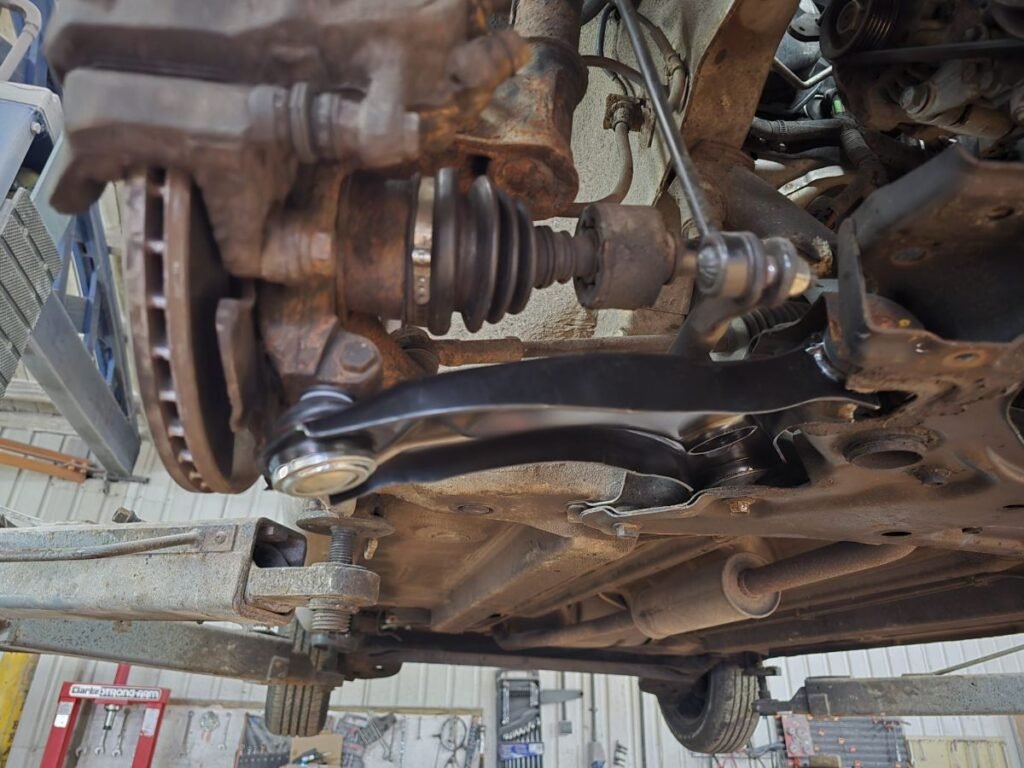
Brakes wear gradually, so changes are easy to get used to. Most cars give some warning before the brakes become a real problem: a new noise, a different feel through the pedal, or a light on the dashboard. Knowing what they mean helps you decide when to book a check, and when not to drive at all.
Stop-start city traffic around Birmingham works brakes harder than steady motorway miles. Here are seven signs worth acting on.
7 warning signs your brakes need checking
1. Squeaking or squealing when you brake
A high-pitched squeak is one of the most common brake complaints. Many brake pads have a small metal wear indicator that is designed to squeal when the pad material is getting thin. Squeaking brakes can also come from dust or moisture, and a light squeak that disappears after a few stops is often harmless. A squeal that keeps coming back, or gets louder, should be checked.
2. Grinding or scraping
Grinding brakes are more serious. A harsh grinding or scraping sound can mean the pad material has worn away and metal is rubbing against the brake disc. That reduces braking and quickly damages the disc, which can turn a pad replacement into new pads and discs. Either way, get it looked at straight away.
3. A soft, spongy or sinking pedal
The brake pedal should feel firm and consistent. If it feels soft, travels further than usual or slowly sinks towards the floor while you hold it, there may be air or moisture in the brake fluid, a fluid leak, or a fault in the hydraulic system.
4. The car pulls to one side when braking
If the car steers itself left or right as you brake, the brakes may not be working evenly. Possible causes include a sticking brake caliper, uneven pad wear or a damaged brake hose. Pulling can also come from steering or suspension faults, which is why a proper inspection matters.
5. Vibration through the pedal or steering wheel
A pulsing pedal or a shaking steering wheel when you slow down, especially from higher speeds, often points to unevenly worn brake discs. Not every vibration comes from the brakes, so it is worth having the cause confirmed rather than guessed.
6. A brake warning light on the dashboard
On many cars the brake warning light can mean the handbrake is still on, the brake fluid level is low or the system has detected a fault. Some cars also have separate lights for worn pads or for the ABS. Check your handbook to see what each light means on your car. A red brake warning light that stays on after you release the handbrake needs attention before you carry on driving.
7. A burning smell, a hot wheel or a fluid leak
A sharp burning smell after normal driving, or one wheel much hotter than the others, can mean a brake is binding: staying partly on when it should release. Drips of fluid near a wheel or on the inside of a tyre can be brake fluid. Both should be checked before the car is used again.
What causes brake problems, and when to have them inspected
Most brake problems come down to normal wear. Brake pads and discs are designed to wear out and be replaced, and how quickly that happens depends on the car, how it is driven and where. Heavy loads and frequent hard braking speed it up. Other causes include brake fluid that has absorbed moisture over time, corrosion on cars that stand unused for long periods, and seized or sticking parts.
A good habit is to have the brakes looked at whenever your car is serviced, and to follow the brake fluid intervals in your car’s handbook. Book a car brake inspection sooner if you notice any of the signs above, if the car has stood unused for a long time, or if you have bought a used car and do not know its history.
When to stop driving
Some signs mean the car should not be driven until it has been checked:
- the pedal sinks to the floor, or the brakes feel as if they are barely working;
- a red brake warning light stays on while you are driving;
- there is loud grinding, or the car pulls hard to one side when you brake;
- you can see brake fluid leaking, or smell burning from a wheel.
If you are not sure whether your car is safe to drive, call us before setting off. If it is not safe to drive, we can recover it to our garage with our own truck, subject to availability. Driving on faulty brakes puts you and other road users at risk, and can turn a smaller repair into a bigger one.
How a garage checks your brakes
A brake inspection is a close look at every part that helps the car stop. It usually covers:
- pad thickness, and whether the pads are wearing evenly;
- the condition of the brake discs, including scoring, corrosion and uneven wear;
- the calipers, to make sure they move and release freely;
- brake hoses and pipes, looking for leaks, damage or corrosion;
- the brake fluid level;
- the handbrake.
At Wali Auto Fix we inspect brakes with the car raised on our lift, so the discs, pads and the parts around them can be seen clearly. We then talk you through what we found, and we agree the work and the price with you before starting anything.
Why regular brake maintenance matters
Brakes rarely fail all at once. Regular checks catch worn pads before they damage the discs, spot leaks and sticking parts early, and give you confidence that the car will stop when you need it to.
Brakes are only part of the picture. Regular car servicing gives a garage the chance to spot other wear before it becomes a problem.
Brake checks at Wali Auto Fix, Birmingham B13
Wali Auto Fix is a car garage at Unit 2, 12 Springfield Road, Birmingham B13 9NY, open Monday to Saturday from 9:30am to 6:00pm. We’re close to Moseley, Sparkhill and Hall Green, and within reach of Acocks Green, Shirley and Solihull; all work is carried out at our Birmingham garage. We check brakes and replace brake pads and discs; our brake repairs in Birmingham page has more detail. When you get in touch, tell us the registration, the make and model, and what you have noticed, such as a noise, a change in the pedal or a warning light.
Frequently asked questions
Is it safe to drive with squeaking brakes?
A light squeak that goes away after the first few stops is often caused by moisture or dust. A squeal that keeps coming back can be the wear indicator telling you the pads are low. If the noise turns into grinding, or the car stops differently, stop driving and get the brakes checked.
How often should my brakes be checked?
Have them looked at whenever your car is serviced, and follow your handbook for brake fluid changes. Get them checked sooner if you notice any of the warning signs in this article.
Do brake pads and discs always need replacing together?
Not always. Pads usually wear faster than discs and are often replaced on their own. Discs are replaced when they are worn below their minimum thickness, badly scored or uneven. An inspection shows which parts actually need replacing.
Book a brake check
If you have noticed any of these signs, don’t wait for the problem to get worse. Call or WhatsApp us on 07300 506756, or send a booking request and we’ll confirm a time with you. Directions are on our contact page, and our home page shows everything we do.