
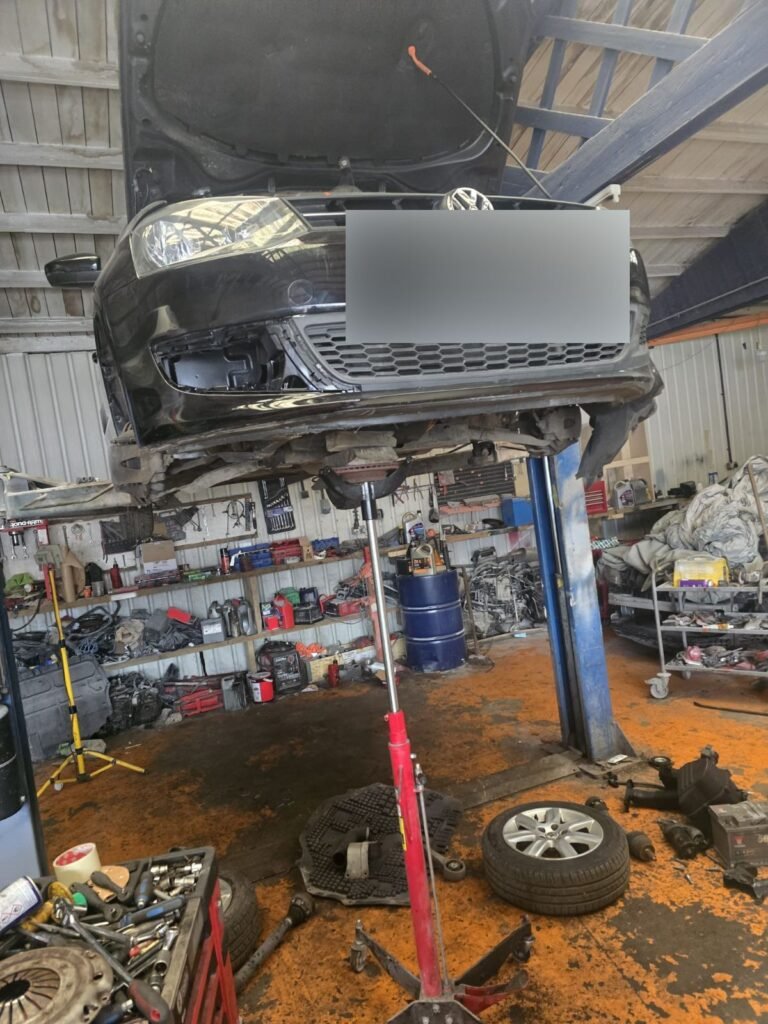
You press the brake pedal and feel a shudder through the steering wheel, a pulse under your foot, or a vibration through the seat. Brake judder is one of the most common problems drivers bring to a garage. It rarely goes away on its own, and it usually gets worse the longer it is left.
This guide explains what usually makes a car judder or shake when braking, what the warning signs mean, how to narrow down the cause before you book a check, and when it is not safe to keep driving.
What brake judder feels like
Where you feel the vibration is a useful clue, although it is not a diagnosis on its own:
- Through the steering wheel: often points to the front brakes, or to front suspension and steering parts.
- Through the brake pedal: a rhythmic pulsing usually means the brake discs are no longer even.
- Through the seat or floor: can come from the rear brakes as well as the front.
It also helps to notice when it happens: only when slowing from higher speeds, every time you brake, or also while you drive at a steady speed.
One thing that is not judder: if the pedal pulses and buzzes only during hard or emergency braking, or on a wet or icy road, that is usually the anti-lock braking system (ABS) working as designed.
Common causes of a car juddering when braking
1. Brake discs that have worn unevenly
People often call this “warped discs”. More often, the disc has worn unevenly or picked up patchy deposits of pad material, so its thickness varies slightly around the disc. Each time the thicker section passes through the pads, the grip changes, and you feel that as a pulse. Heavy braking, a brake that is sticking, or a car that has stood unused can all start the problem. The usual fix is new discs and pads, but an inspection confirms whether that is really needed.
2. Corrosion on the discs
A light layer of surface rust after rain or a night outside is normal and clears within a few stops. Cars that stand unused for weeks can develop deeper patches or a band of corrosion that does not clear, and that can cause judder and noise.
3. A sticking brake caliper
If a caliper or its slider pins do not move freely, the pad can stay in light contact with the disc. That builds heat and wears the disc unevenly. Other signs include the car pulling to one side, one wheel much hotter than the others after a drive, or a burning smell.
4. Worn suspension or steering parts
Braking puts a lot of load through the front suspension. Worn bushes, ball joints or track rod ends can allow movement that shows up as a shudder when you brake, often alongside knocks or clunks over bumps. In that case, new discs alone will not cure it.
5. Wheel and hub problems
A wheel that is out of balance or damaged usually causes vibration at certain speeds whether you are braking or not. Rust or dirt between the hub and the disc can stop the disc sitting perfectly flat, so it runs slightly out of true. One important warning: if the shaking started soon after a wheel was removed, the wheel nuts or bolts may not be tight. Stop and have them checked before driving further.
6. Glazed or contaminated brake pads
Pads that have overheated can become glazed, and pads contaminated with oil or brake fluid grip unevenly. Both can cause judder as well as weaker braking.
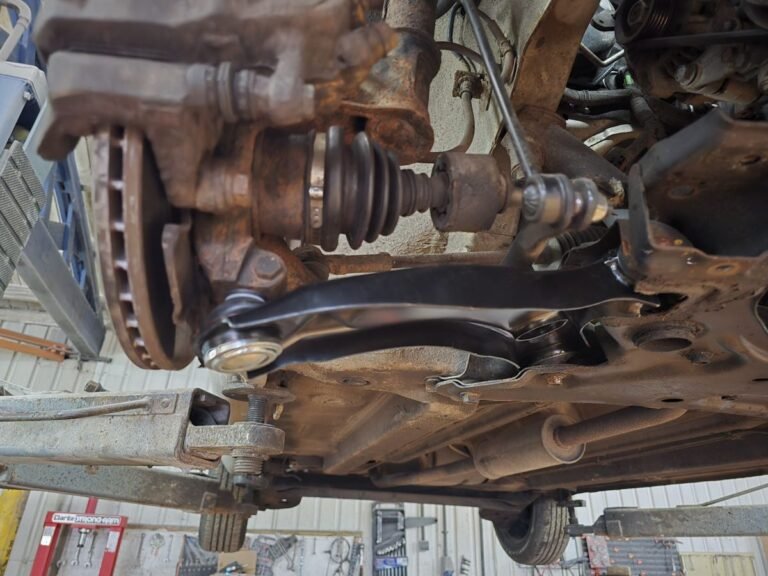
Juddering at high speed, at low speed or downhill
Drivers often notice judder first in particular situations, and each one gives a hint:
- Slowing from higher speeds: small variations in disc thickness are felt most when the discs are turning fast and carrying more heat, so uneven discs often show up here first.
- Downhill or after repeated braking: the brakes get hotter, which makes uneven discs and glazed pads more noticeable.
- At low speed: a judder or grabbing feeling at walking pace can point to corrosion on the discs, contaminated pads or a sticking caliper.
- When driving as well as braking: if the vibration is there at a steady speed too, wheel balance, a damaged wheel or worn suspension become more likely than the brakes alone.
Judder after new brake pads or discs
New parts should brake smoothly, so judder soon after a brake job is worth getting checked rather than ignored. Common reasons include rust or dirt left on the hub when the new disc was fitted, wheel nuts tightened unevenly, new pads fitted to old, uneven discs, or harsh braking before the new pads and discs have bedded in. A check of the hub faces, the fitting and the discs usually finds the cause.
Hybrid and electric cars
Hybrid and electric cars slow down partly by regenerative braking, so the friction brakes are used less than on a petrol or diesel car. That is good for pad wear, but discs that are rarely used firmly can corrode, especially on the rear, and corroded discs can judder or grind. Regular brake inspections matter just as much on these cars.
How to narrow down the cause
You do not need to take anything apart. Simply notice these things during normal driving; do not brake harshly just to test it:
- Does it happen only when braking, or also when driving at a steady speed?
- Do you feel it in the steering wheel, the pedal or the seat?
- Is it worse when slowing from higher speeds, or downhill?
- Has any work been done recently, such as new brakes or a wheel being removed?
- Are there other signs, such as a noise, a burning smell or the car pulling to one side?
Telling the garage these answers helps the inspection focus on the right area straight away.
Is it safe to drive with brake judder?
Mild judder means something needs attention soon. The brakes still work, but uneven discs can increase stopping distances and wear the other parts faster. Stop driving and get help if:
- the steering wheel shakes so much that it is hard to hold;
- the shaking started after a wheel was removed or refitted;
- the car pulls hard to one side, or you hear grinding;
- the pedal feels soft or sinks, or a red brake warning light comes on.
If the car should not be driven, we can recover it to our garage with our own truck, subject to availability: see collection and recovery. Our article on the 7 warning signs your car brakes need checking covers the other signs to look out for.
What a garage checks
A thorough brake judder check usually includes:
- the brake discs, for uneven wear, scoring and corrosion;
- the pads, including how evenly they have worn;
- the calipers and slider pins, to make sure they release freely;
- the hub faces and how the discs and wheels are fitted;
- the suspension and steering joints at each corner;
- the wheels, and a road test to reproduce the judder.
At Wali Auto Fix we inspect the car on our lift, explain what we found and what is causing the judder, and agree the work and the price with you before starting. You can read more about our brake repairs in Birmingham and suspension repairs, or see all our mechanical repairs.
Brake judder checks in Birmingham
Our garage is at Unit 2, 12 Springfield Road, Birmingham B13 9NY, open Monday to Saturday from 9:30am to 6:00pm. Drivers from Moseley, Sparkhill, Hall Green and Acocks Green are close by, and we are within easy reach of Yardley and Solihull; all work is carried out at our Birmingham garage. When you get in touch, tell us the registration, the make and model, and what you have noticed.
Frequently asked questions
Can brake judder go away on its own?
Light surface rust after rain clears within a few stops. Judder caused by uneven discs, a sticking caliper or worn suspension does not go away and usually gets worse.
Why does my car only shake when braking at high speed?
Small variations in disc thickness are more noticeable when the discs are turning quickly and carrying more heat, so judder often shows up first when slowing from higher speeds.
Can brake discs be skimmed instead of replaced?
Some discs can be machined if they are still thick enough, but on most modern cars new discs are the usual repair. An inspection shows the disc thickness and condition, and we will explain the options for your car.
Do I need new pads if I get new discs?
New pads are commonly fitted with new discs so that both surfaces bed in together. An inspection shows what your car actually needs.
Book a brake judder check
If your car judders or shakes when you brake, get it checked before it gets worse. Call or WhatsApp us on 07300 506756, or send a booking request and we’ll confirm a time with you. Directions are on our contact page.