
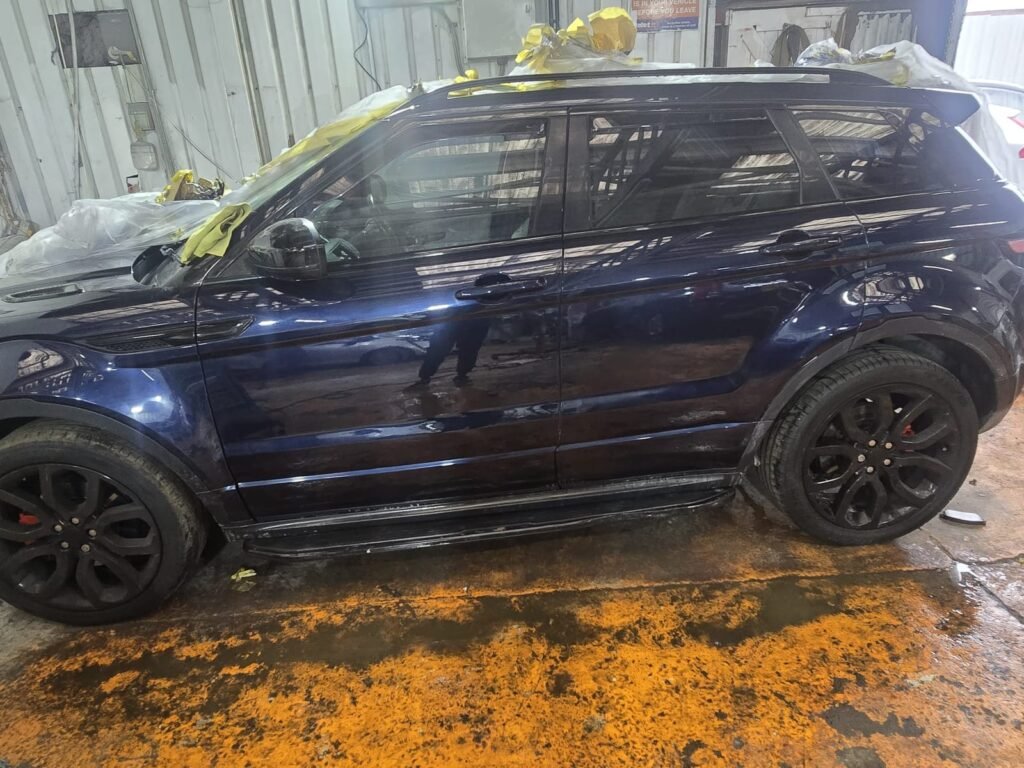
The photos in this article are from a real job in our Birmingham workshop: the left-hand front and rear doors of a dark blue Range Rover Evoque being resprayed. One photo shows the doors masked and prepared for paint; the others show the same doors later, after painting. They do not show the original damage, and the later photos still show masking on other parts of the car, so they show the doors after painting rather than the car being handed back.
A door respray is one of the most common jobs in a bodyshop. Doors pick up car-park dings, key scratches, scuffs from bollards and stone chips along the lower edge, and once the paint is damaged it usually needs more than a touch-up to look right again. Respraying a door is not just a case of spraying colour over the top, though. Most of the work, and most of what decides how good the result looks, happens before any paint is applied.
This guide explains how a car door is prepared and repainted, why neighbouring panels are often painted or blended at the same time, why two doors are often done together, and what affects the time and cost.
A door respray from our workshop
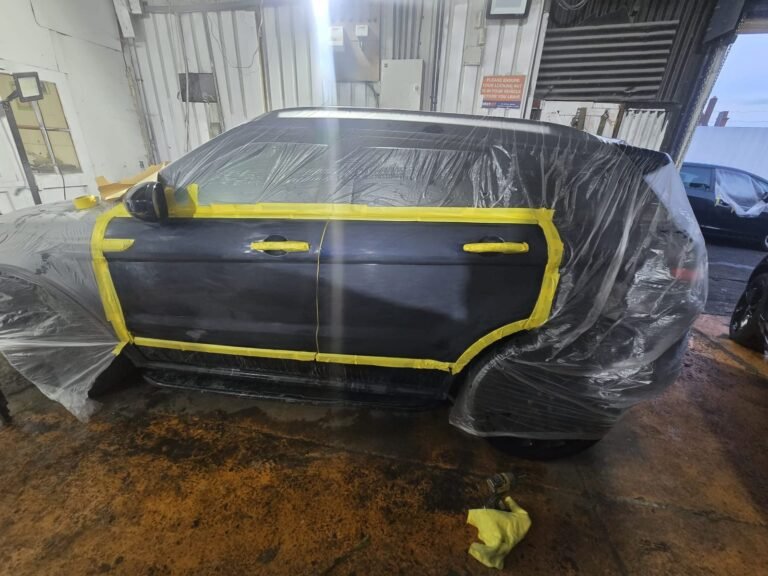
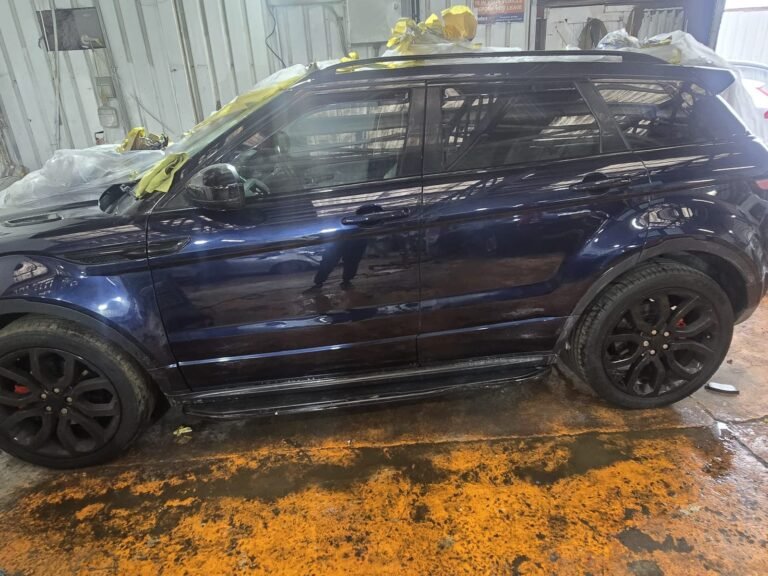
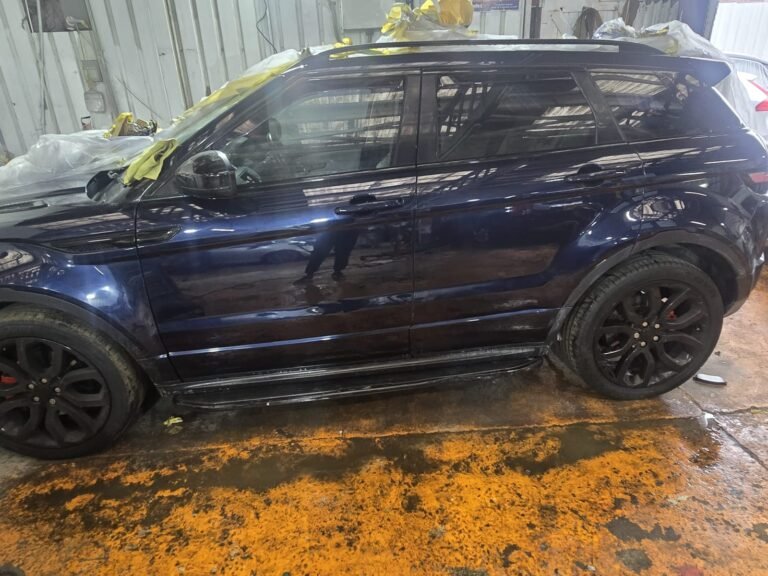
In the preparation photo, the Evoque’s left-hand front and rear doors have been masked off with yellow tape that follows the edges of the doors, and the rest of the car is covered in plastic sheeting so that paint mist cannot settle on it. The door surfaces look flat and dull, as prepared surfaces usually do before painting. The door handles are taped and the wheels and lower body are covered.
In the later photos, the same two doors have a glossy dark blue finish. There is still masking on the roof, windscreen and bonnet, which tells you the car was photographed in the workshop after painting, not on collection. We have not described the original damage because the photos do not show it.
When does a car door need a respray?
A respray is usually the right repair when the paint itself is damaged, or when a dent repair has gone through the paint. Common reasons include:
- Scratches through the clear coat or colour. If a fingernail catches in the scratch, it is usually too deep to polish out.
- Dents that need filling. Once filler or primer has been used, the area must be painted.
- Stone chips and scuffs along the lower edge of the door, especially where they have started to spread.
- Peeling, faded or failing clear coat, sometimes left over from an earlier repair.
- Rust bubbling under the paint, which needs treating before it is repainted.
Not every mark needs paint. Light swirls and surface marks can sometimes be improved with polishing, which we explain in can car polishing remove scratches? If the door has a dent as well as paint damage, our guide to car door dent and scratch repair covers the repair side in more detail.
How a car door is prepared for paint
Every bodyshop has its own routine, but door resprays usually follow the same broad steps. These are the general steps; not every one is needed on every car, and our photos show only the masking and the painted result, not each stage of this job.
1. Inspect and agree the repair
We look at the door in good light, check how far the damage spreads and whether the neighbouring panels are marked too, and agree what will be painted before work starts.
2. Clean and remove or protect fittings
The door is washed and degreased, because wax, silicone and road film stop paint sticking. Parts that should not be painted, such as handles, mirrors, trims, badges and seals, are either removed or carefully masked, depending on the car.
3. Repair and smooth the surface
Any dents are reshaped and, where needed, filled and shaped. The damaged paint is sanded back and the edges of the sound paint are feathered, so there is no visible step where old and new paint meet. Bare metal or filler is primed, and the primer is sanded smooth.
4. Mask the rest of the car
Masking is what you can see in our preparation photo. Tape follows the panel edges and plastic sheeting covers everything else. Good masking keeps paint off the glass, trim and neighbouring panels, and the tape line decides where the new paint stops.
How the door is repainted
Most modern cars use a basecoat and clear coat finish. The basecoat carries the colour, and the clear coat on top gives the gloss and protects the colour from the weather and sunlight.
- Colour. The car’s paint code is the starting point, but the same code can vary slightly between cars, so the colour is checked against the car itself before spraying.
- Basecoat. The colour is applied in several thin coats, allowing each one to flash off before the next.
- Clear coat. The clear coat goes on over the colour and gives a finished panel its depth and shine.
- Drying and finishing. Once the paint has dried, any small dust marks can be flatted and polished out, and the masking is removed and the fittings refitted.
Door edges and shuts
A door has edges and an inner frame, the shut, that you only see when it is open. Depending on the repair, the shut may be painted as well, so the colour does not stop at an obvious line when the door is opened. This is one of the things to ask about when you get a quote.
Blending into the neighbouring panels
Even a perfectly matched colour can look slightly different next to older paint, because the paint on the rest of the car has aged and the light hits each panel differently. To avoid a visible line at the edge of the door, bodyshops often blend the new colour a short way into the neighbouring panel, such as the front wing or rear quarter, and then clear coat over it. Metallic and pearl colours are the most likely to need blending, because the metallic flakes have to sit the same way as on the original paint to look right from every angle.
Our guide to panel respray or full respray explains when one panel is enough and when more of the car needs painting.
Why two doors are often painted together
The front and rear doors sit side by side, and on many cars a scratch or scrape runs across both. Even when only one door is damaged, painting both can give a more even finish across that side of the car, because the eye compares the two doors first. Whether that is needed depends on the damage and the colour, and we explain the options before any work starts.
How long does a door respray take, and what affects the cost?
We cannot give a fixed figure without seeing the car, but these are the things that make the biggest difference to the time and price:
- how deep and widespread the damage is, and whether there are dents to repair first;
- whether one door or both doors need painting, and whether neighbouring panels need blending;
- the colour, as metallic, pearl and multi-layer paints take more work to match;
- whether the door shuts need painting, and how many fittings need removing;
- whether there is rust to treat.
The paint also needs time to dry properly before the car goes back on the road, so we will tell you when to expect it back when we agree the work.
Looking after a freshly resprayed door
New paint can stay slightly softer for a while after it has dried. Ask us when you collect the car how long to wait before using a pressure washer or an automatic car wash, and before applying wax or polish to the repaired door.
Car door resprays in Birmingham
All our bodywork and paint repairs are carried out at our garage on Springfield Road, Birmingham B13. We repair and respray doors, wings, bumpers and other panels for drivers across Birmingham and nearby areas such as Solihull. If the car cannot be driven, ask about vehicle recovery and collection, subject to availability. You can see more about our paintwork and resprays, dent and scratch repair and accident damage repair, and more jobs on our work page.
Frequently asked questions
Can you respray just one car door?
Yes. A single door can be resprayed on its own. Depending on the colour and how the paint has aged, the neighbouring panel may be blended so the colour change is not visible at the door edge.
Will the new paint match the rest of my car?
The colour is mixed from the car’s paint code and checked against the car itself, and blending into the neighbouring panels helps the new paint sit naturally next to the old. Metallic and pearl colours need the most care.
Do the door handles and mirror have to come off?
It depends on the car and the repair. Fittings are either removed or carefully masked, as you can see with the taped handles in our photo.
Can you quote for a door respray from photos?
Photos help us understand the damage and the likely options. Some repairs need an inspection before we can confirm a price, and we will tell you if so. Our guide to taking photos for a bodywork quote shows what helps.
Get a door respray quote
Send us photos for a bodywork quote: one of the whole side of the car, and close-ups of the damaged door from two angles in good daylight. You can also call or WhatsApp us on 07300 506756. Directions are on our contact page.